
Chargeback statements that add up to the bill
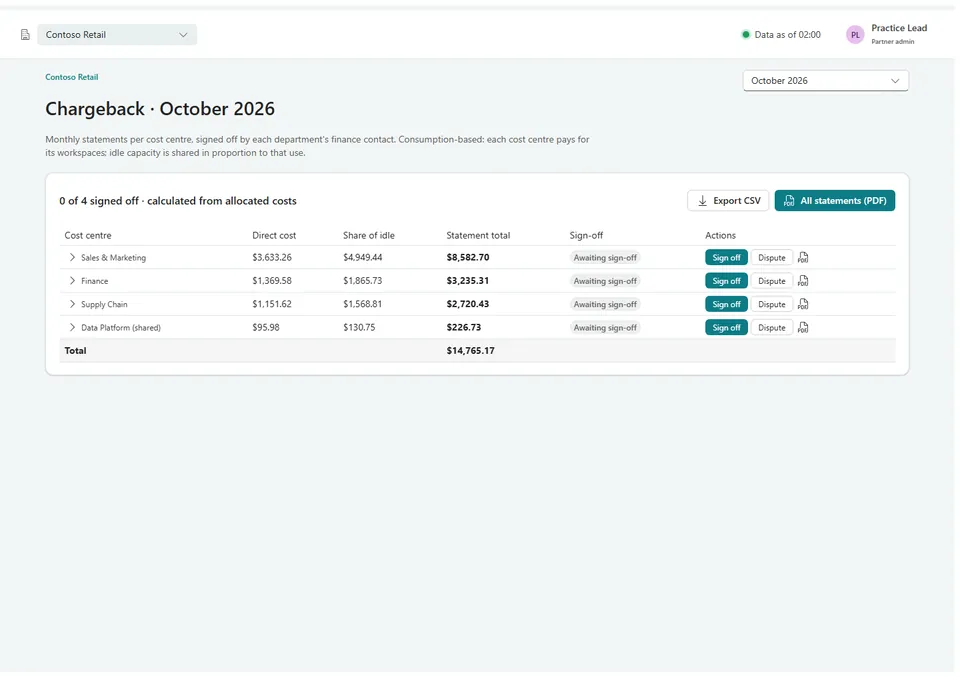
Sharing a data platform's cost between departments usually means a spreadsheet, a percentage export and an argument. DataSightFort produces a monthly statement for each department that adds up exactly to the bill, lets each department's finance contact sign it off or dispute it, and keeps a record of both.
How it works
- Map workspaces to cost centres. Each workspace is mapped to a department or cost centre. Anything not yet mapped goes to "Unassigned", so it's visible rather than lost.
- Share idle capacity fairly. The capacity nobody used is shared out in proportion to each department's direct cost, so every dollar of the bill lands on a statement.
- Exact to the cent. Amounts are rounded to cents, and the remainder goes on the largest statement, so the statements add up exactly to the bill.
- Closed months. Statements cover the last 3 closed months.
- Sign-off and disputes. Each department's finance contact can sign off or dispute a statement (a reason is required) and can reopen it. If the figures are recalculated after sign-off, the statement shows "Changed since sign-off", so nobody is caught out.
- Exports. PDF for sending, CSV for your finance system.
- Audit trail. Every sign-off, dispute and download is recorded in the tamper-evident audit log.
Chargeback or showback?
Showback shows each department what it used. Chargeback bills it, with a statement it signs off. DataSightFort supports both: start with showback to build trust in the numbers, then switch on sign-off when departments are ready to be charged. See Glossary: chargeback vs showback.
Why "adds up to the bill" matters. A chargeback process only works if nobody can argue with the total. When statements are built from usage percentages, the departments' shares rarely match the invoice, and every gap becomes a debate about method instead of a decision about spend. Starting from the bill, sharing idle capacity by a rule everyone can read, and rounding so the cents land in one known place, keeps the conversation on what each department used and whether it was worth it.
Works across platforms. Statements come from the same FOCUS-based cost model as the rest of DataSightFort, so as more platforms arrive, their costs can appear on the same statements. Microsoft Fabric is available now.
Who it's for
- Finance and FinOps: statements that reconcile to the invoice, with a sign-off trail.
- Department heads: a clear, disputable bill rather than a percentage.
- Partners and MSPs: a monthly deliverable for each client, produced in minutes.
Frequently asked questions
Why not just use the percentages from a usage report?
Percentages don't say what to pay, and they don't add up to the invoice. DataSightFort starts from the bill, so every statement is in money and the total matches.
What happens to workspaces that aren't mapped?
Their cost goes to an "Unassigned" statement until they're mapped, so it never disappears.
How is idle capacity shared?
In proportion to each department's direct cost. A department that used more pays a larger share of the idle part.
What if the numbers change after sign-off?
The statement is flagged "Changed since sign-off", and the department can review it and sign off again.
Can departments dispute a statement?
Yes, with a required reason. Disputes are logged and can be reopened.
See it on sample data.
We're looking for a small group of Microsoft partners and MSPs to shape DataSightFort before launch.